The Language of the Forest
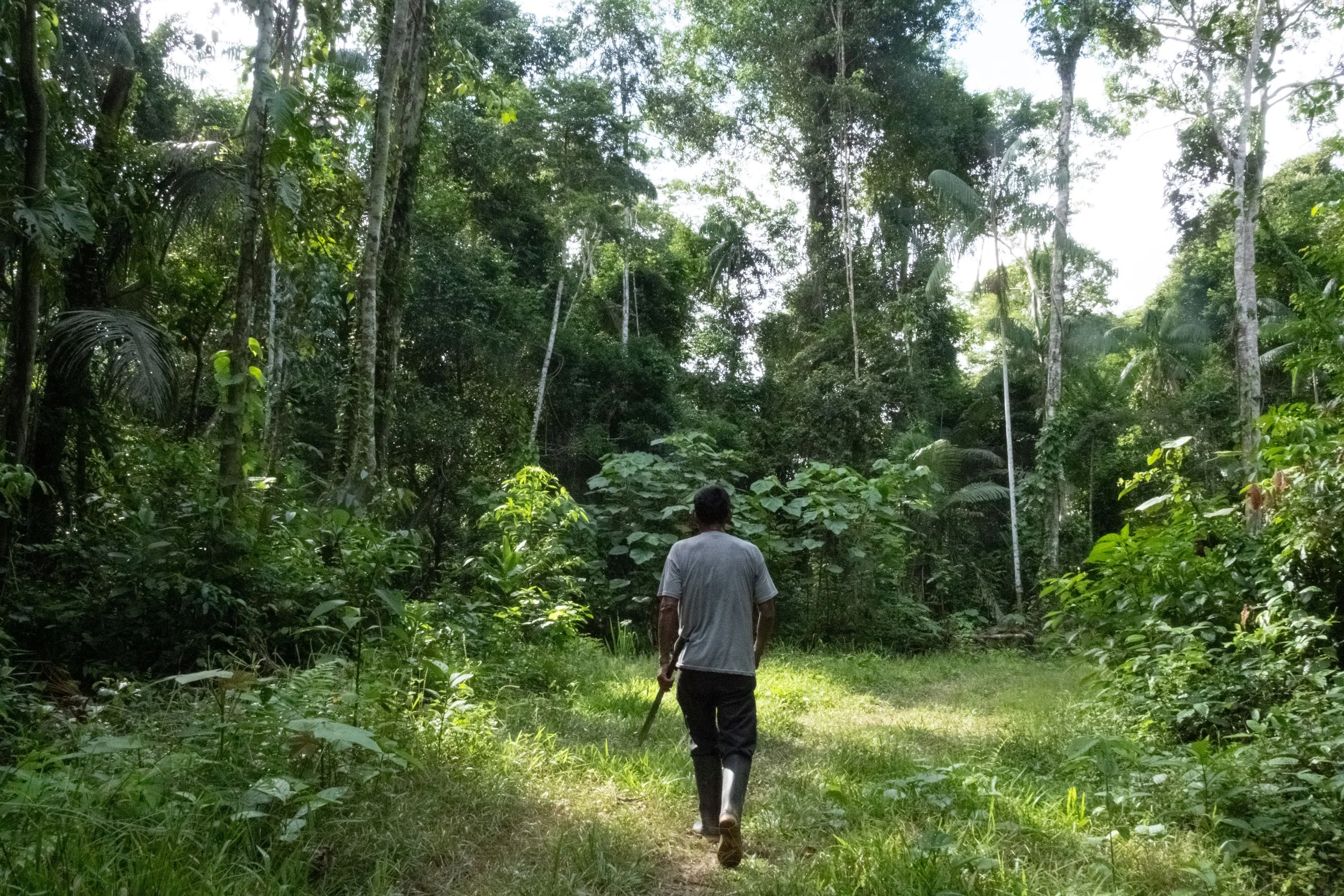
Don Juan walks into the forest.
text and photos by Emma Schneck, environmental journalist
who visited Camino Verde in 2025
Sunlight filters through the towering canopies, casting shadows on the forest floor. Walls of gnarled vines and tangled brush seem to envelop me and my guide as we make our way deeper into the rainforest. I’m on my first walk through the jungle of Tambopata with Don Juan, the nursery manager at Camino Verde, as he searches for wild seeds to collect.
He is quiet, focused on the world around us. He navigates the dense foliage with ease and a quick swing of his machete. I follow him closely behind, my rubber boots squishing loudly on the muddy ground, intermixing with the chirps and squawks of the jungle echoing through the trees.
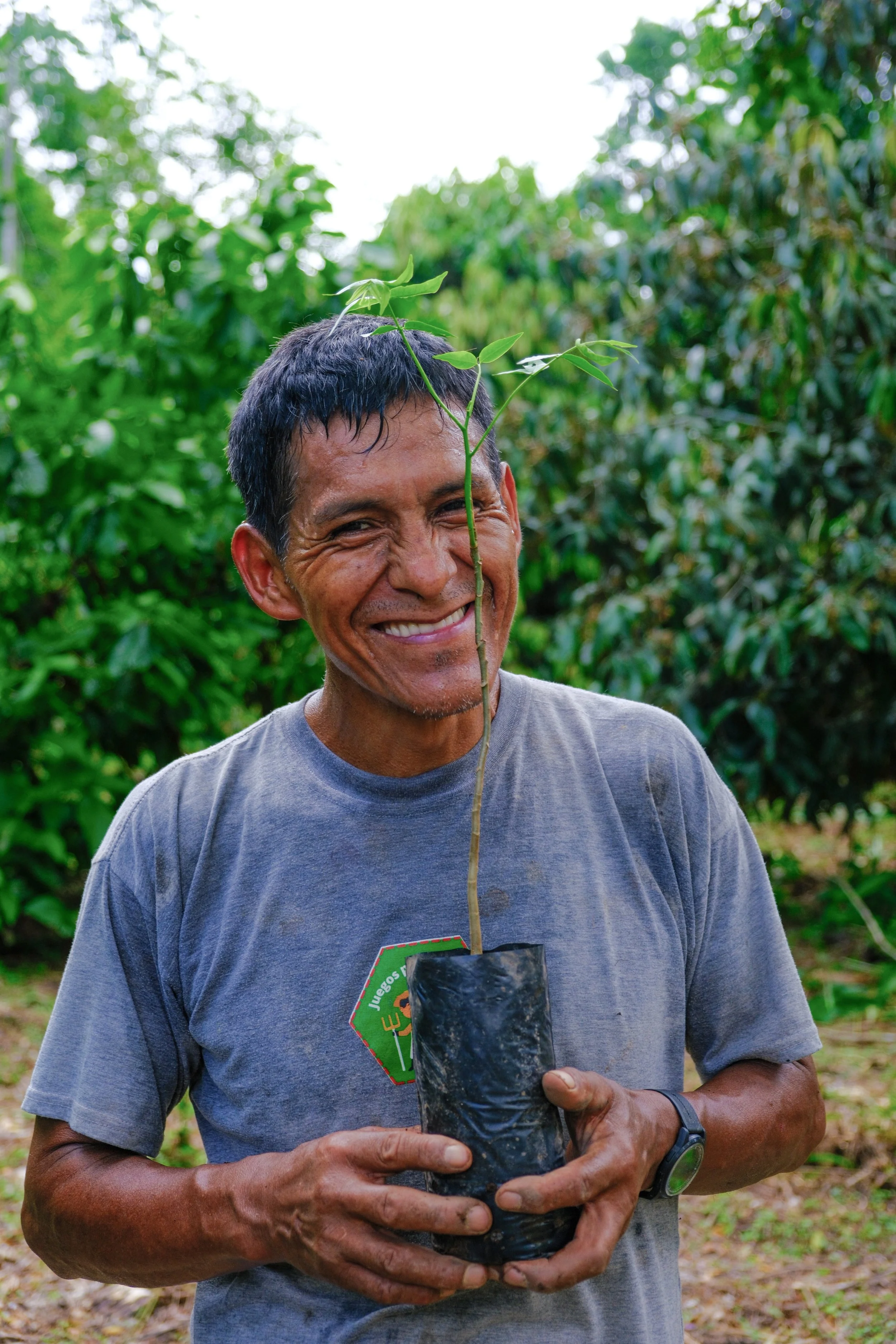
Don Juan and one of the many tree seedlings he propagates each year at Camino Verde.
All around me, the rainforest is speaking a language I cannot comprehend. My foreign ears are not yet attuned; I am not privy to the conversations above my head and deep below my feet: the chatter of soil biomes, the social buzz of mycelium networks. I cannot quite grasp how this forest—this living system—comes to be, how these all work together, and what they all need to survive, to flourish.
He reads the leaves quickly; his eyes do not linger but rather actively scan the dense foliage for the species he seeks. He knows the shape of the cacao, the texture of tobacco, and the feel of cacahuillo between his fingers. More crucially, he knows how they all fit together: which plants create the best conditions for others to grow, and what each species needs to survive.
Don Juan isn’t from the Amazon. He comes from a small village in the Andes mountains, an ecosystem quite unlike this tropical, dense forest of Tambopata. While as a young teenager, Don Juan came to Madre de Dios to work in the lucrative gold mining industry, and his love of nature brought him to farming and cultivation. Through decades of experimenting, he’s learned the language of the rainforest and in turn has come to care for it.
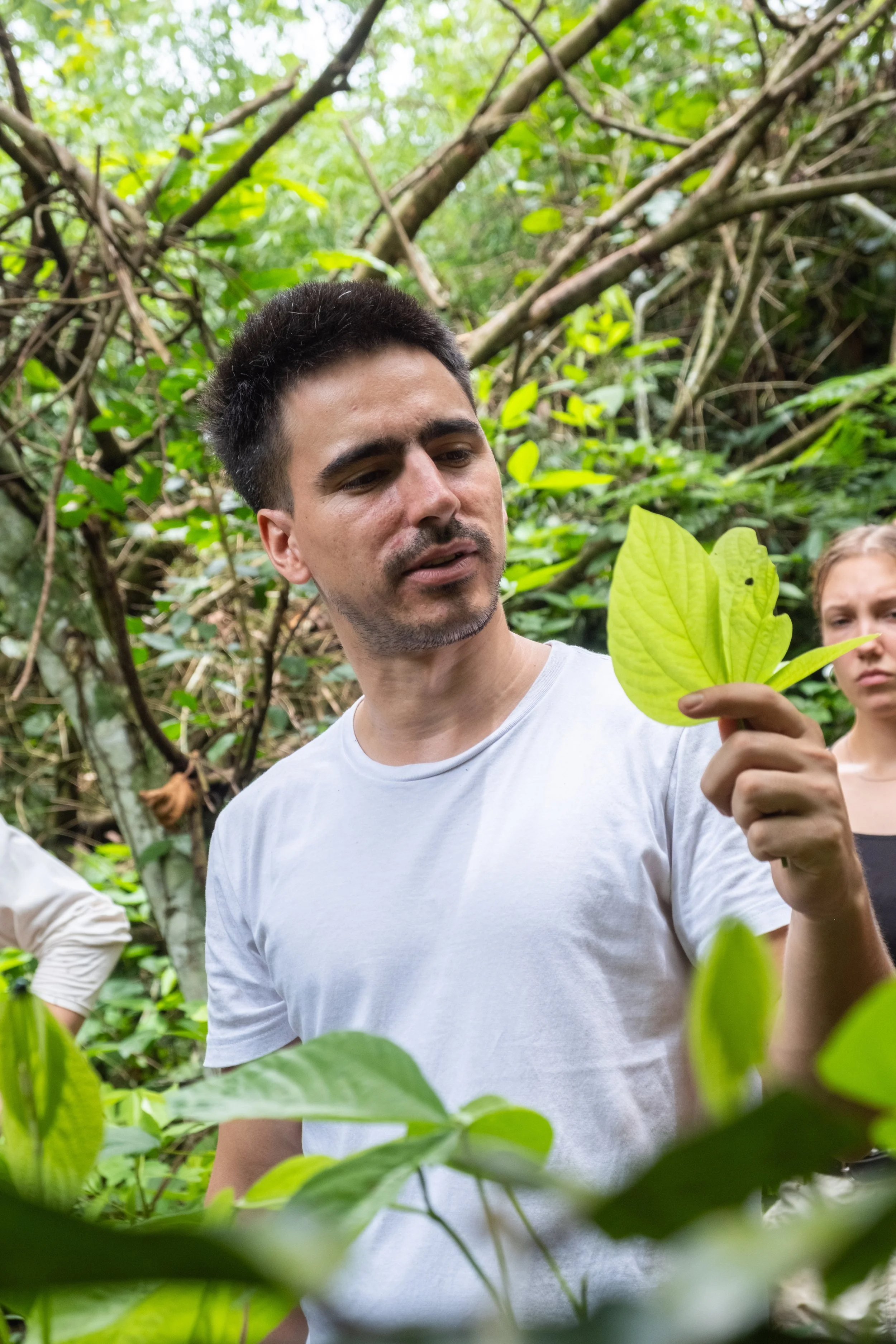
Alejandro teaching volunteers to recognize a plant species.
“I love the jungle because it is our lungs,” he tells me on our walk. “Taking care of the plants now protects them for our children and future generations.”
Working with Camino Verde, he says, has given him the opportunity to work with the forest while also cultivating his own farmland nearby. Having access to employment in conservation allows him to do what he loves full-time in this beautiful and remote area.
In many ways, there would be no Camino Verde without Don Juan. In addition to the deep environmental knowledge he shares with the team, he’s also the beating heart of the Camino Verde family. His teammates lovingly refer to him as “Juancito,” or “Papito” and listen attentively to him while helping him plant out in the field. He shares knowledge and love for the plants and by his example teaches the team how to listen to the natural world around them.
In our own ways, for different reasons, we’ve all come to CV Baltimori to learn the language of the forest and understand forest systems on a deeper level.
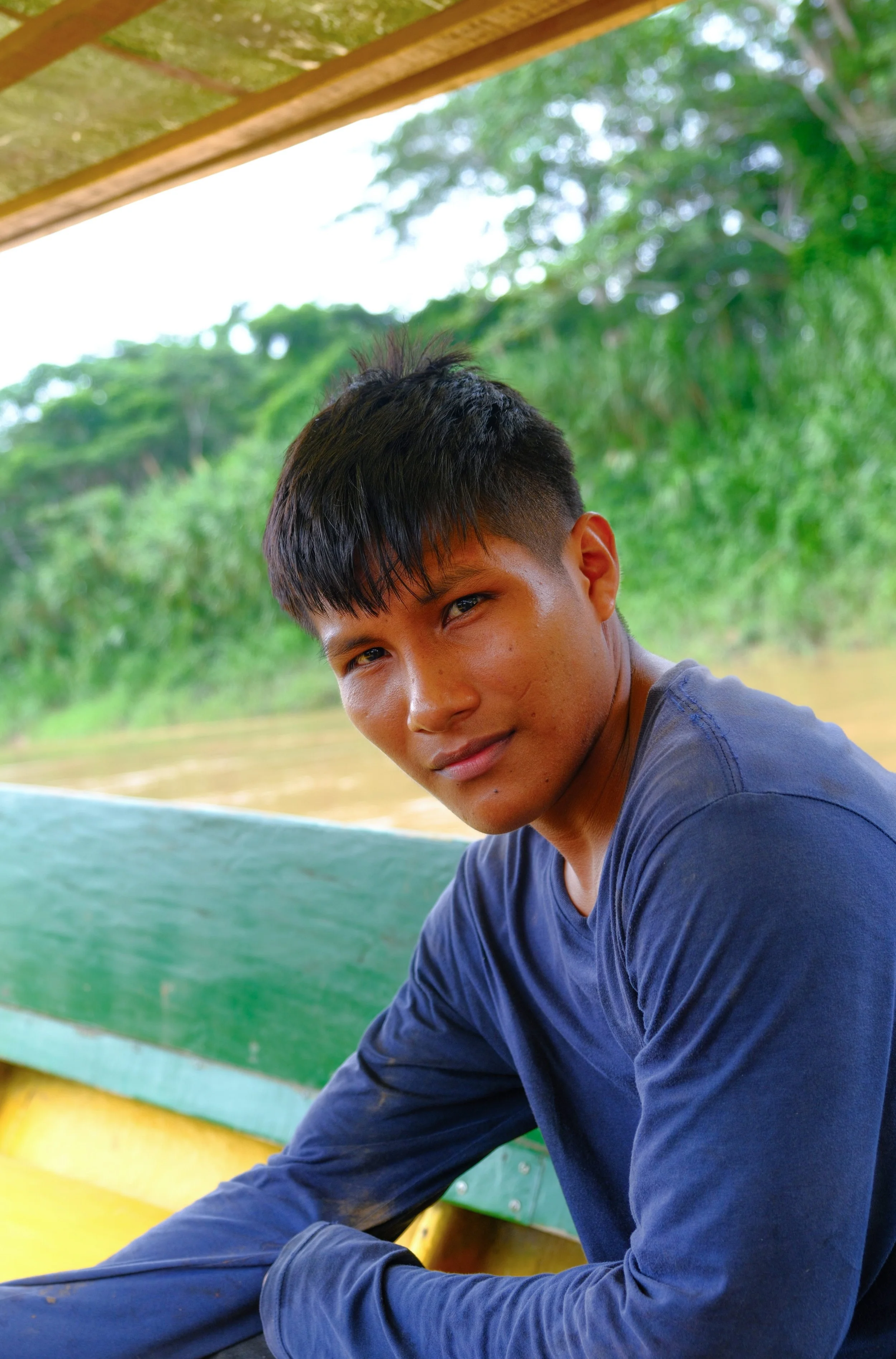
Neftalí on the Tambopata River.
On my second jungle outing, I’m led by Alejandro—the farm coordinator at Camino Verde Baltimori—as he guides a group of visitors through the trees. Despite his Lima upbringing, Alejo feels like a natural teacher in the forest. On our journey, he stops carefully at each plant to lecture us on its name, its relatives, and its main uses. He quizzes us on leaves and tree bark. He points out fascinating bugs and shows us how to read our surroundings for traces of wildlife.
Teaching in the forest, he tells me, is his favorite part of the job. Living and working at the research station in Baltimori has given him the opportunity to learn more about rainforest systems and share this knowledge with visitor groups.
Camino Verde might not be a classroom in the traditional sense, but it is a living lab for all kinds of experiments. CV uses their two field stations in Tambopata to test which plant species flourish in these jungle environments. They work with local communities in the north of Peru, in Loreto, with plants that can be cultivated and sold as products to benefit both people and nature. Because of these experiences, local and Indigenous communities have begun cultivating various endangered species in their fields and in turn protect the Amazon from further deforestation.
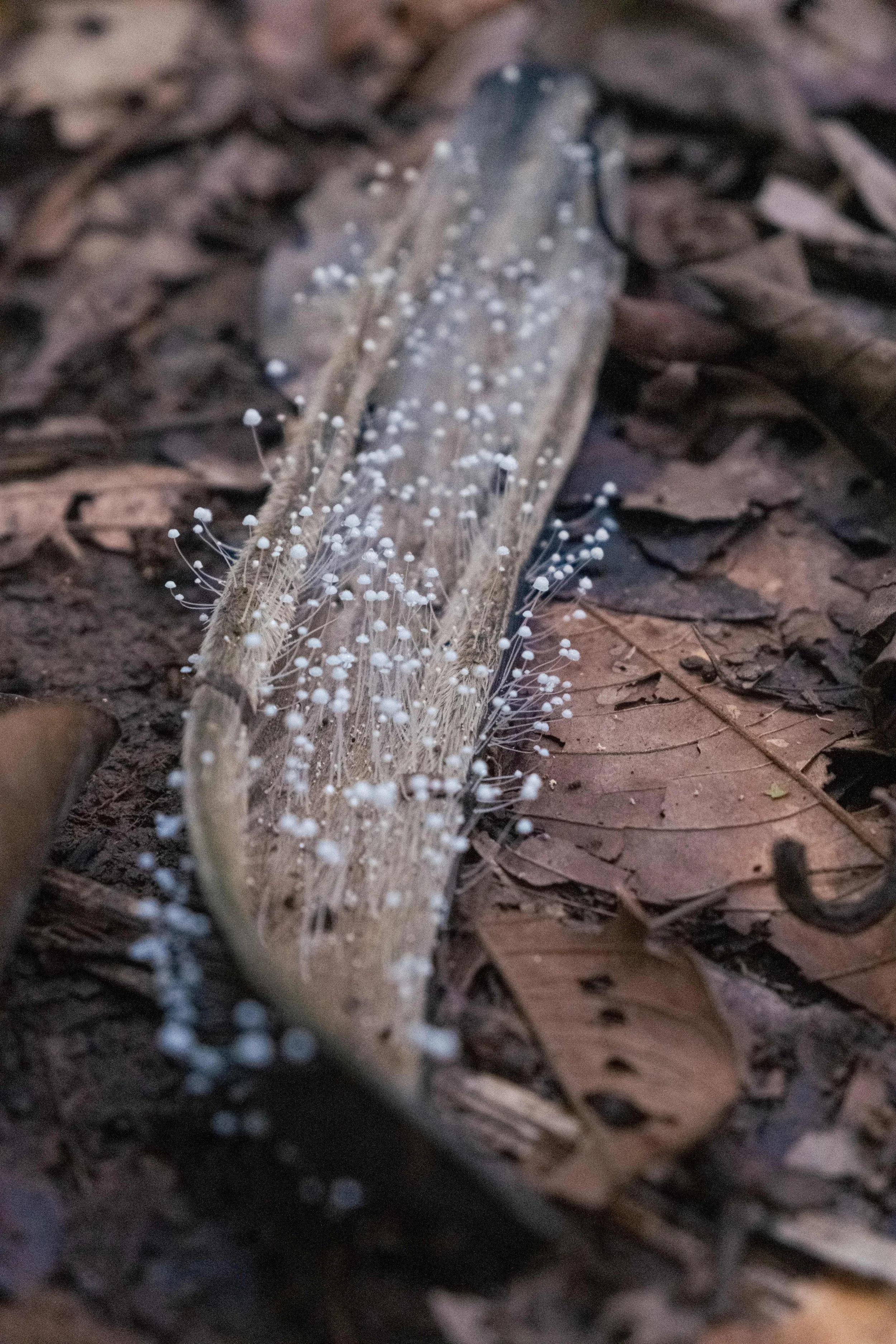
The primary forest at Camino Verde Baltimori.
Camino Verde’s newest and youngest staff member, Neftalí, comes from one of the families that CV works with in Northern Peru. He hails from a small community about eight hours by boat from the isolated city of Iquitos, where his mother cultivates rosewood and cacao.
While Neftalí was already familiar with many of the ins and outs of cultivating in the jungle, he says he has learned and grown a lot in the four months he’s been working at Camino Verde. In his spare time, he enjoys working out in the makeshift gym on site and patiently tutoring foreign volunteers in Spanish. While he doesn’t know exactly what he wants to do career-wise, he knows he will continue to work in the jungle and help his family with their cultivation.
Sharing these conversations with the team, I realize what makes Camino Verse special is not the sheer number of trees planted or species propagated (though this number is impressive too), rather it’s in the connection that people share, both with each other and the forest system around them. To them, conservation is a practice: a living experiment. It’s something aerobic and alive that requires collaboration, learning, and experimentation.
Meeting these knowledge keepers, I recognize how integral humans are in protecting the Amazon. As the forest grows, so too does that knowledge as it is shared and taught to future stewards of the land. Perhaps the most impactful thing we can do for the rainforest is to learn how to listen.
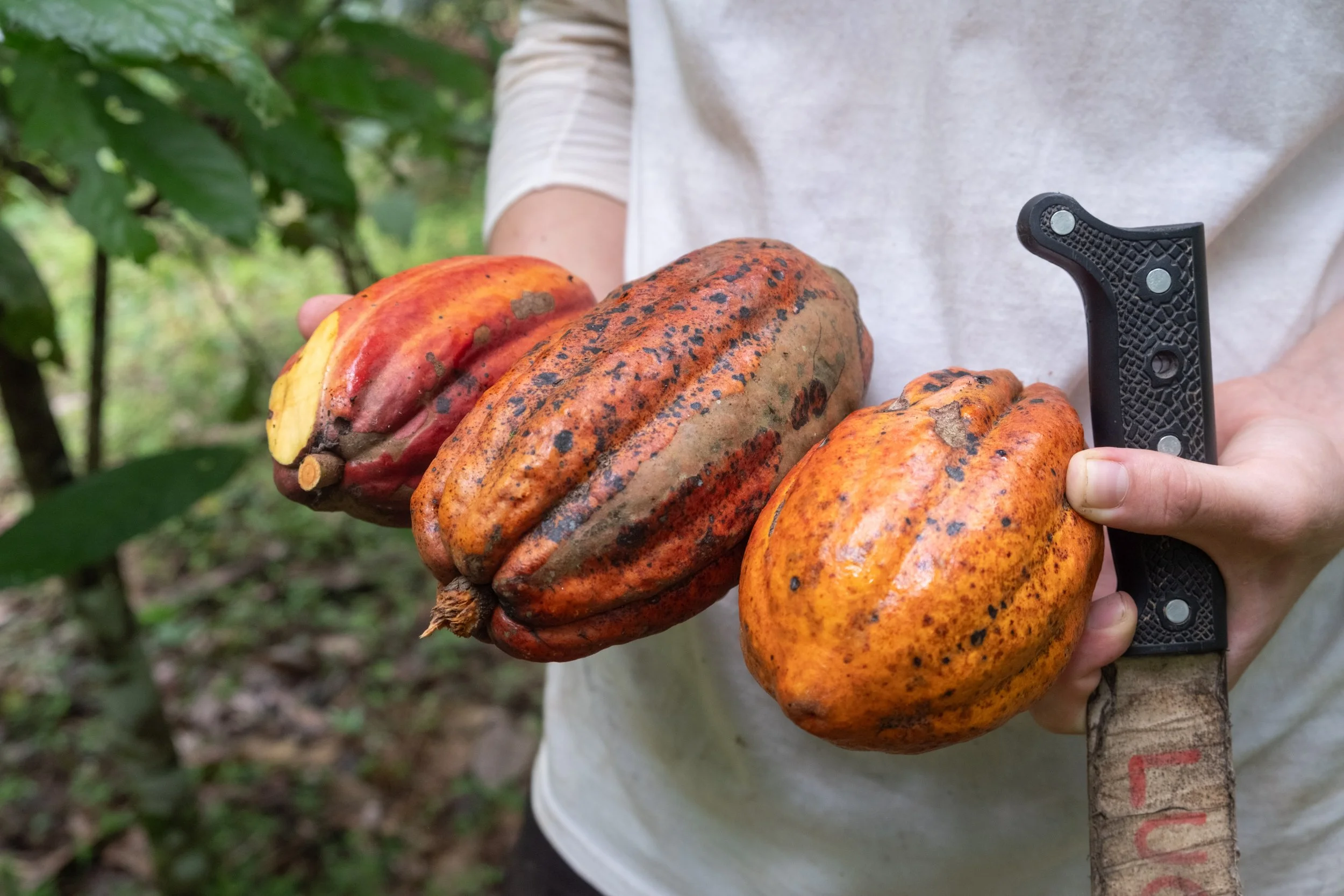
A diversity of cacao varieties are grown at Camino Verde Baltimori.
Emma Schneck is an environmental journalist, photographer, and editor specializing in sustainable tourism and environmental activism. She has an MSc in Environmental Governance at the University of Oxford. “I tell visually-engaging stories that bridge the nexus between environment, global travel, climate solutions and more.” She visited Camino Verde in 2025.